


Over Mokume-gane-木目金

Mokume-gane is een prachtige en ingenieuze techniek om unieke, natuurlijk ogende patronen in metaal te creeren, voornamelijk voor luxe sieraden en objecten.
Belangrijke kenmerken:
-Unieke patronen: Geen twee stukken zijn ooit identiek.
-Diepte: Het patroon loopt door het hele materiaal, het is geen oppervlakkige coating.
-Vakmanschap: Het vereeist grote vaardigheid, zowel bij het lamineren, als bij het bewerken en polijsten.
Mokume-gane betekent letterlijk "houtnerfmetaal" en is van oorsprong een oude (17e eeuw) Japanse smeedtechniek met een sterk organisch karakter. Een blok Mokume-gane bestaat uit verschillende lagen (9-20) edelmetaal. Vanwege de complexiteit van de productie, is Mokume Gane geen populaire techniek, ondanks het feit dat er veel objecten gemaakt zijn in deze stijl. De patronen die ontstaan tijdens het proces lijken op houtnerven die een indruk geven van een in de natuur ontstaan metaal. Hierdoor ontstaan unieke sieraden, mokume-gane ringen, gespen en sierobjecten.
Geschiedenis van Mokume-gane
De oorsprong van de techniek mokume-gane ligt in de wapensmidsen in het oude Japan. Een landheer, Samurai genaamd, was net als zijn collega in het westen, de ridder, verantwoordelijk voor zijn onderdanen. Zijn zwaard was niet alleen een gevreesd wapen maar ook het symbool van trouw aan zijn beloftes, zijn plichtsbesef en rechtvaardigheid en vooral zijn persoonlijke eer. Het was een garantie voor de veiligheid van diegenen die hij diende te beschermen en een bijna heilig voorwerp voor de bezitter.
Een instrument met een dergelijke emotionele waarde kon niet alleen uit grijs staal bestaan maar behoorde ook de belangrijkheid en de rijkdom van zijn bezitter te weerspiegelen. De oude wapensmeden begonnen de onderdelen van het zwaard en de schede te versieren met speciale, kostbare metalen ornamenten. Men begon met name de tsuba, het blad waardoor het zwaard in de schede wordt gestoken, kunstvol te bewerken. Hoe rijker de eigenaar was, hoe kunstzinniger het blad werd en hoe kostbaarder het materiaal werd. Zo ontstond de techniek mokume-gane. Later werden met deze techniek kunstvoorwerpen als kommen, vazen en sieraden gemaakt. In de loop der eeuwen is deze techniek bijna vergeten maar inmiddels is het in Japan als kunstvorm herontdekt.
De zwaarden en messen werden gemaakt van damaststaal, de oorsprong van het mokume-gane. In de rijk versierde zwaardmontages werd daarnaast gebruik gemaakt van andere technieken, als damasceen en intarsia. Het verschil tussen damast en mokume-gane is dat bij mokume-gane alleen non-ferro metalen worden gebruikt en bij damast alleen staal soorten.

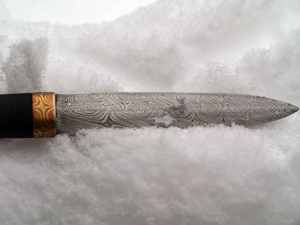
Het vervaardiging en verwerking van Mokume-gane
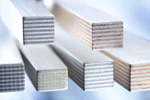
De basis van Mokume gane wordt gevormd dmv druk en het verhitten van dunne plaatmateriaal (0.6-1mm). De metalen moeten een soortgelijke metallurgische verwerking en technische eigenschappen bezitten, zoals trek en rek eigenschappen. De dunne plaatjes edelmetaal worden op elkaar gestapeld zodat er duidelijke kleurcontrasten ontstaan(zie foto) en wat belangrijk is, het metaal met het laagste smeltpunt wordt afwisselend tussen de rest van de plaatje metaal opgestapeld zodat deze functioneert als een soort soldeer. De individuele plaatjes metaal moeten absoluut vlak zijn met geschuurde oppervlak en vrij van oxidatie. De opgestapelde platen worden tussen een stalen klem vast gedraaid en vormen te samen een blok. Door druk en temperatuur (700-1000 gr C.afhankelijk van welk metaal), ontstaat er een uitwisseling van metaalmoleculen aan het contact oppervlak, deze vormen een nieuwe moleculaire kristal, een blok-achtige massa. Kenmerkend voor het welproces/diffusieproces is het feit dat het smelten bij een temperatuur plaats vindt, het geen lager is dan het smeltpunt van de gebruikte metalen/legeringen. De typische patronen ontstaan door verschillende methoden zoals, frezen, beitelen, boren, ponsen en de technieken torderen, graveren en etsten. Door telkens weer opnieuw dunner smeden van het blok Mokume komen de onderliggende lagen metaal naar de oppervlakte.
 Voor meer foto's over deze techniek verwijs ik u naar http://www.metalartcreations.nl/fotos/fotos-workshopmokume.html
Birgit Doesborg organiseert twee keer per seizoen een workshop mokume-gane. Deze kan alleen gevolgd worden als men enige ervaring in het vak edelsmeden heeft. Lees er meer over op de website www.metalartcreations.nl
Zie de volgende websites voor nog meer Mokume-gane kunstenaars:
- www.mokume-gane artist.eu
- www.mokume.com
- www.mokume-gane.com
- www.mokume-saar.de
- nl.wikipedia.org/wiki/Mokume-gane
- www.schichtwerk.com/de/
- www.stienen-damast.de
News
- vr, 28/11/2025 - 12:26 Expositie Bossche wintersalon 2025-2026
- vr, 06/06/2025 - 14:56 Expositie sieraden 6 juli 2025
- ma, 14/04/2025 - 14:42 Designmarket I love it! What is it!
- di, 29/07/2025 - 12:50 Storytelling through jewelry and art-objects
- di, 18/06/2024 - 13:39 Expositie Mokume-gane sieraden en sierobjecten 7 juli 2024
- di, 30/05/2023 - 21:26 Expositie sieraden en objecten 9 Juli 2023
- wo, 06/07/2022 - 23:01 Sieradenexpositie 10 juli 2022 Doesdesign met cursisten
- wo, 06/07/2022 - 14:08 Project Kettingreactie
- za, 14/11/2020 - 13:58 Winter is coming!
- vr, 07/06/2019 - 15:16 Expositie 30 Juni 2019